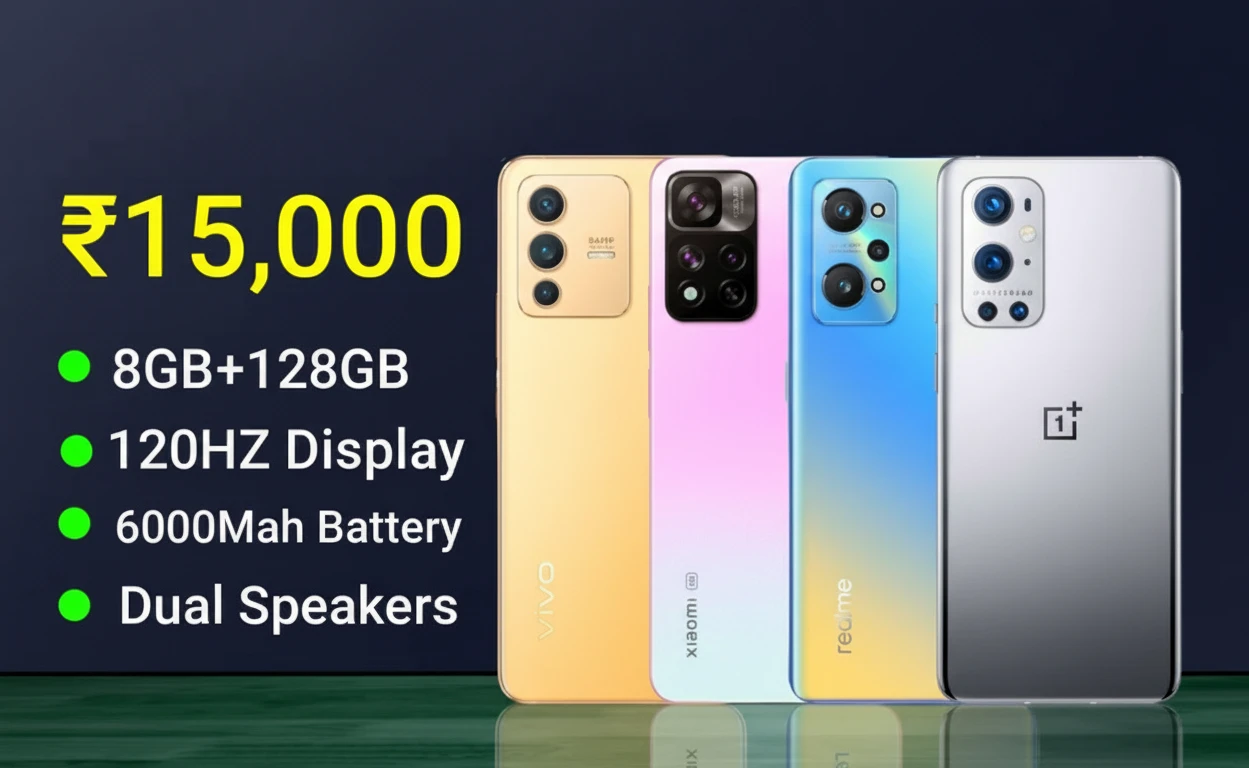
Finding the best 5G 8GB RAM phone under 15000 has become easier than ever because smartphone brands are now offering premium level features at budget prices whether you are a student attending online classes a gamer looking for smooth performance or someone who wants fast internet and multitasking without spending too much money there are many great options available in India right now.
The demand for the best 5G 8GB RAM phone under 15000 is increasing rapidly because users no longer want slow phones with lagging apps and weak battery life.
People now expect strong processors smooth displays good cameras and future ready 5G connectivity even in budget smartphones thankfully brands like Xiaomi Realme Vivo Motorola Samsung and POCO are competing hard in this segment.
In this detailed guide we will explore the best 5G 8GB RAM phone under 15000 compare their features discuss what makes them special and help you choose the perfect smartphone according to your needs.
Why Choose the Best 5G 8GB RAM Phone Under 15000
Before buying a smartphone many people ask whether 8GB RAM really matters the answer is yes phones with 8GB RAM provide better multitasking smoother gaming and faster app switching compared to lower RAM models.
Here are some major benefits of choosing the best 5G 8GB RAM phone under 15000:
- Smooth gaming experience
- Better multitasking
- Faster app loading
- Future ready 5G support
- Improved overall speed
- Better performance for online classes and work
If you are on a tighter budget and exploring even more affordable 5G options, you can also check our detailed guide on 5G best phones under ₹10,000 in India where we have listed phones that deliver 5G connectivity without crossing the ₹10,000 mark. On the other hand, if you are open to slightly stretching your budget for more premium features, our guide on the best 5G phones under ₹20,000 covers phones with better displays, faster processors, and more storage options. Knowing your budget range clearly will help you find the right phone without overspending.
Redmi 13 5G
~₹12,499Realme Narzo 70x 5G
~₹11,299POCO M7 Pro 5G
~₹14,999Motorola G64 5G
~₹13,999Samsung Galaxy M15 5G
~₹13,299Frequently Asked Questions — Best 5G 8GB RAM Phone Under 15000
In 2026, the POCO M7 Pro 5G is the top pick for the best 5G phone under ₹15,000 with 8GB RAM. It comes with a 6.67-inch AMOLED display with 2100 nits peak brightness, MediaTek Dimensity 7025 Ultra processor, 50MP Sony camera with OIS, and a 5110mAh battery with 45W fast charging.
Other strong options include:
- Redmi 13 5G — Best for camera (108MP) and price value (~₹12,499)
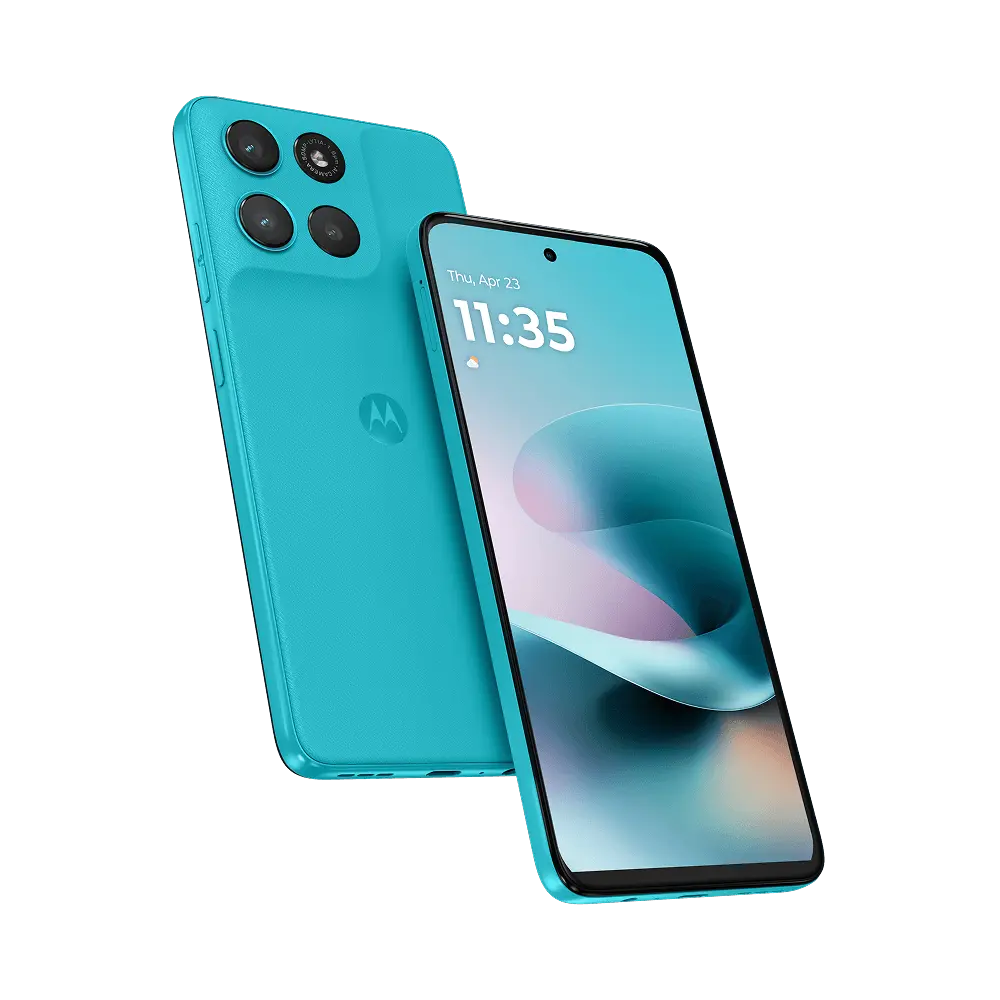
- Motorola G64 5G — Best for battery life (6000mAh) and clean software
- Samsung Galaxy M15 5G — Best for long-term software support (4 OS updates)
- Realme Narzo 70x 5G — Best for slim design and fast 45W charging
Your best choice depends on whether you prioritize gaming, battery, camera, or software experience.
Yes, 8GB RAM is more than enough for the majority of Indian smartphone users in 2026. Here is what 8GB RAM can handle comfortably:
- Running 10 to 15 apps simultaneously in the background
- Playing heavy games like BGMI, Free Fire MAX, and Call of Duty Mobile
- Multitasking between Instagram, YouTube, WhatsApp, and Chrome
- Online classes, video calls, and OTT streaming without any lag
Most flagship apps in 2026 use between 300MB and 800MB of RAM. With 8GB, you will not face memory pressure during daily use. Many phones in this segment also offer virtual RAM expansion (up to 6GB extra from storage), which gives you even more headroom for multitasking.
Only professional video editors or users running emulators may need 12GB RAM. For everyone else, 8GB is future-proof for the next 3 to 4 years.
Absolutely yes. As of 2026, 5G is live in over 700 cities and towns across India. Jio and Airtel have rolled out True 5G on the n78 band (3500MHz), which is the most widely available 5G band in India right now.
Here is why buying a 5G phone under ₹15,000 is a smart decision in 2026:
- 5G data speeds are 5x to 10x faster than 4G in covered areas
- Lower latency means smoother gaming, video calls, and live streaming
- The 5G premium in this price segment is barely ₹500 to ₹1,000 extra over 4G phones
- 5G coverage will only grow over the next 3 years, making your phone future-proof
Even if 5G is not available in your city today, buying a 5G phone ensures your device stays relevant for the full 3 to 4 year ownership cycle. Buying a 4G phone in 2026 is not recommended.
For gaming under ₹15,000, the POCO M7 Pro 5G is the clear winner. Here is why it stands out:
- Processor: MediaTek Dimensity 7025 Ultra — handles BGMI and Free Fire at 60fps without drops
- Display: 6.67-inch AMOLED with 120Hz refresh rate and 2100 nits peak brightness for outdoor gaming
- RAM: 8GB or 12GB options with virtual RAM support
- Battery: 5110mAh with 45W fast charging so you can refuel quickly between sessions
- Protection: IP64 rating keeps the phone safe from sweat and light splashes during intense gaming
The Realme Narzo 70x 5G is another solid gaming option if you want a more budget-friendly pick around ₹11,299 with 45W charging and a 120Hz display.
For the best camera under ₹15,000, here is how the phones rank:
- POCO M7 Pro 5G — Best overall camera. It uses a 50MP Sony LYT-600 sensor with OIS (optical image stabilisation) and f/1.5 aperture. The Sony sensor produces sharper, more colour-accurate photos than most phones in this range. Also has a 20MP front camera, the best selfie shooter in this segment.
- Redmi 13 5G — Highest resolution at 108MP with 3x in-sensor zoom. Great for detailed daylight shots and social media content.
- Samsung Galaxy M15 5G — Only phone here with a triple rear camera (50MP + 5MP ultrawide + 2MP macro). Best for variety of shots including wide-angle.
- Motorola G64 5G — Has a real 8MP ultrawide camera with 118 degree field of view, rare at this price.
If camera quality is your top priority, the POCO M7 Pro 5G offers the best real-world output with the Sony sensor and OIS.
For the longest battery life under ₹15,000, the Motorola G64 5G is the best choice with its massive 6000mAh battery. In real-world usage, it can easily last 2 full days on moderate use or about 18 hours of continuous screen-on time.
Battery comparison across all 5 phones:
- Motorola G64 5G — 6000mAh, 33W charging
- Samsung Galaxy M15 5G — 6000mAh, 25W charging (slower to charge)
- POCO M7 Pro 5G — 5110mAh, 45W charging (fastest to charge, full in 53 minutes)
- Realme Narzo 70x 5G — 5000mAh, 45W charging
- Redmi 13 5G — 5030mAh, 33W charging
If fast charging matters more to you than total capacity, the POCO M7 Pro 5G wins with a full charge in just 53 minutes.
Both phones are made by Xiaomi but target different users. Here is a direct comparison:
- Display: POCO M7 Pro wins — AMOLED vs IPS LCD, and 2100 nits vs 550 nits brightness
- Processor: POCO M7 Pro wins — Dimensity 7025 Ultra is significantly faster than Snapdragon 4 Gen 2 AE
- Rear Camera: Redmi 13 wins on megapixels (108MP vs 50MP), but POCO wins on real quality (Sony sensor + OIS)
- Front Camera: POCO M7 Pro wins — 20MP vs 13MP
- Battery: POCO M7 Pro has slightly more capacity (5110mAh vs 5030mAh) and charges faster (45W vs 33W)
- Price: Redmi 13 5G wins — about ₹2,500 cheaper
Verdict: If budget is tight, choose Redmi 13 5G. If you can stretch to ₹14,999, the POCO M7 Pro 5G gives significantly better value with its AMOLED display, faster processor, and superior camera.
Students need a phone that handles online classes, note-taking apps, social media, YouTube, and occasional gaming — all while lasting through a full college day. Here are the top picks:
- Redmi 13 5G (~₹12,499) — Most affordable, good camera for scanning notes and documents, 5030mAh battery, smooth 120Hz display
- Motorola G64 5G (~₹13,999) — Best for students who want a clean ad-free experience. Near-stock Android means no bloatware slowing things down. The 6000mAh battery lasts through the longest college days easily.
- Samsung Galaxy M15 5G (~₹13,299) — Best for students who want long-term software updates (4 OS upgrades). Samsung’s One UI is also very student-friendly with good split-screen and note features.
For most students, the Motorola G64 5G is the best recommendation because of its battery, clean software, and reliable performance without distractions.
For most users, 128GB storage is enough for 2 to 3 years of comfortable use. Here is a realistic breakdown of 128GB usage:
- Operating system and pre-installed apps use about 20 to 25GB
- Popular apps (Instagram, WhatsApp, Chrome, YouTube) use about 10 to 15GB
- Heavy games like BGMI use 3 to 4GB each
- Remaining 80GB+ is free for photos, videos, and music
However, if you:
- Download a lot of movies and web series offline
- Take 4K videos frequently
- Install more than 5 heavy games
…then 256GB would be better. All phones in this list support microSD expandable storage (up to 1TB or 2TB), so you can always add more storage cheaply without buying a more expensive variant.
Each brand has different strengths. Here is an honest comparison for the Indian market in 2026:
- Samsung — Best for long-term reliability and after-sales service. Samsung has the widest service network in India with over 3,000 service centres. Offers 4 OS upgrades and 5 years of security patches, the best software support in this segment. Best if you plan to use the phone for 3+ years.
- Xiaomi (Redmi/POCO) — Best for value and performance. You get the best specs per rupee. HyperOS has improved a lot but still has some ads and bloatware in the budget segment. Best for users who prioritize raw performance and features over a clean software experience.
- Motorola — Best for clean software. Near-stock Android means fewer ads, less bloatware, and faster updates. Motorola also has a strong build quality reputation and promises Android upgrades. Best for users who hate bloatware and want a hassle-free experience.
Verdict: For reliability and long-term use — Samsung. For best specs and value — Xiaomi. For clean experience — Motorola.
In 2026, two processor families dominate budget 5G phones in India — Qualcomm Snapdragon and MediaTek Dimensity. Here is what you need to know:
- MediaTek Dimensity 7025 Ultra (POCO M7 Pro, Motorola G64) — Currently the best processor in this price range. Excellent for gaming, multitasking, and general performance. Built on 6nm process for good power efficiency.
- Qualcomm Snapdragon 4 Gen 2 AE (Redmi 13 5G) — Good 4nm processor with reliable 5G performance. Snapdragon is often preferred for smooth day-to-day usage and good software optimisation.
- MediaTek Dimensity 6100+ (Realme Narzo 70x, Samsung Galaxy M15) — Entry-level 5G processor. Good for daily tasks and casual gaming but falls behind Dimensity 7025 Ultra in heavy workloads.
For best gaming and performance: choose Dimensity 7025 Ultra. For reliable daily performance: Snapdragon 4 Gen 2 AE is also an excellent choice.
This is one of the most asked questions about budget phones. Here is the honest answer:
- AMOLED advantages: Deeper blacks, more vibrant colours, better contrast ratio, lower power consumption when using dark mode, thinner display panel, always-on display support
- IPS LCD advantages: More accurate colour reproduction for photos and videos, no risk of burn-in over time, generally brighter and more uniform at lower brightness levels, slightly cheaper to manufacture
In this price segment, only the POCO M7 Pro 5G and Samsung Galaxy M15 5G offer AMOLED/Super AMOLED displays. The others come with IPS LCD panels.
Verdict: For social media, gaming, and entertainment — AMOLED looks significantly better. If you use your phone mostly for reading, photography, or work — a good IPS LCD like the one on Motorola G64 5G is perfectly fine.
Yes, absolutely. All 5 phones in this list can run BGMI, Free Fire MAX, and Call of Duty Mobile smoothly. Here is the breakdown:
- POCO M7 Pro 5G — Runs BGMI at HDR + 60fps consistently. Best gaming phone in this list.
- Motorola G64 5G — Handles BGMI at Smooth + Extreme (90fps) with minimal heating thanks to the efficient 6nm chip.
- Redmi 13 5G — Plays BGMI at Smooth + Ultra (60fps) comfortably for casual to regular gamers.
- Realme Narzo 70x 5G — Good for Free Fire at High + 60fps and BGMI at Smooth settings.
- Samsung Galaxy M15 5G — Suitable for casual gaming. The Dimensity 6100+ is not ideal for competitive gaming sessions.
For serious BGMI or Free Fire players, invest in the POCO M7 Pro 5G. For casual gaming, any phone in this list will do the job well.
Software update support is very important if you plan to use your phone for 3 or more years. Here is the official update promise for each phone:
- Samsung Galaxy M15 5G — 4 Android OS upgrades + 5 years of security patches. Best update support in this segment by far.
- POCO M7 Pro 5G — 2 Android OS upgrades + 4 years of security patches. Decent support.
- Motorola G64 5G — 1 Android OS upgrade (to Android 15) + 3 years of security patches. Acceptable but limited.
- Redmi 13 5G — Launched with Android 14 / HyperOS. Xiaomi has not officially confirmed the exact update timeline for this model.
- Realme Narzo 70x 5G — Launched with Android 14 / Realme UI 5.0. Realme typically provides 2 years of OS updates for Narzo series.
Verdict: If long-term software support matters to you, Samsung Galaxy M15 5G is the clear winner with 4 OS upgrades and 5 years of security updates.
Both platforms are safe and reliable, but different phones are exclusive to different platforms in India:
- Flipkart exclusive: POCO M7 Pro 5G, Redmi 13 5G, Realme Narzo 70x 5G
- Amazon exclusive: Motorola G64 5G
- Available on both + Samsung website: Samsung Galaxy M15 5G
Tips for buying smart:
- Wait for Big Billion Days (Flipkart) or Great Indian Festival (Amazon) for the best discounts — prices often drop ₹1,000 to ₹2,000
- Use bank card offers (HDFC, SBI, ICICI) for an additional 5% to 10% instant discount
- Check No-cost EMI options if you do not want to pay the full amount upfront
- Always buy from the official brand store on these platforms to ensure warranty coverage
Avoid buying from unknown third-party sellers even if the price looks very low, as warranty may not be valid.

Explore more articles on PickMyTechAI’s buying guides section where we regularly update our recommendations based on the latest launches in India.